School and Pedagogy
Seccorell is ideally suited for designing period-themed booklets.
Head, heart and hand
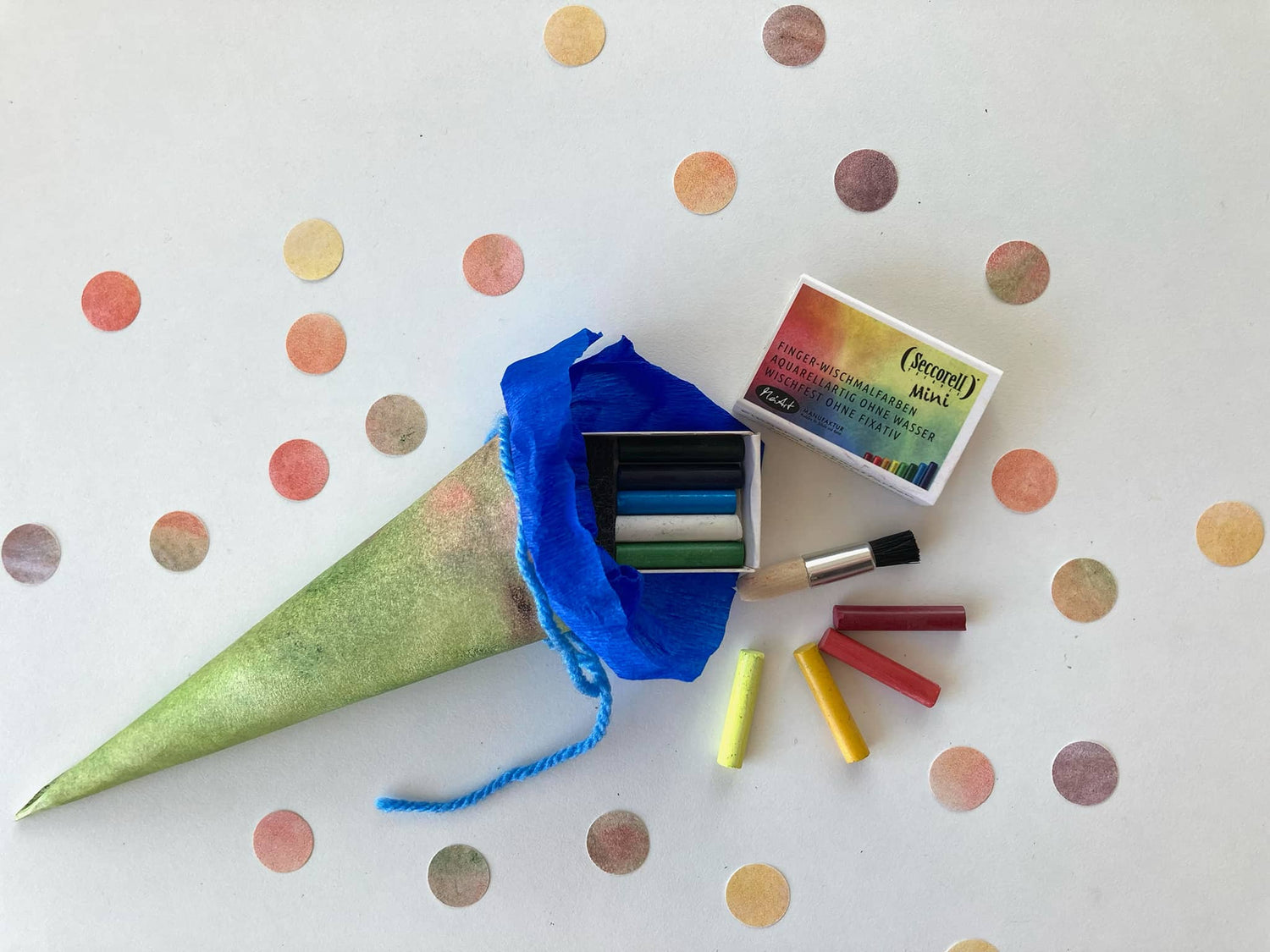
Painting with Seccorell doesn't require a complicated studio setup. Since neither water pots, brushes, nor fixative spray are needed, you can easily create beautiful designs on pages from period books, copies, and handwritten material on almost any type of paper.
From an educational perspective, the use of Seccorell offers some useful advantages and effective practice areas:
1. When dosing the amount of abrasive color powder, foresight is required: How much do I need? How much can I process?
2. The rubbing of the pigment on the abrasive and the subsequent brushing and wiping painting correspond to a primal human need: something is destroyed and then remade .
3. Skin contact during painting creates a closeness to the emerging picture.
4. Ideally, all fingers are used for the different shades. This contributes to the training of the basic senses, the underdevelopment of which is often lamented. This also allows for practicing body geography and can be combined with a simple attention exercise: "Which finger is next?" - "The green one, the ring finger, is right!"
Craftsmanship period, 3rd grade
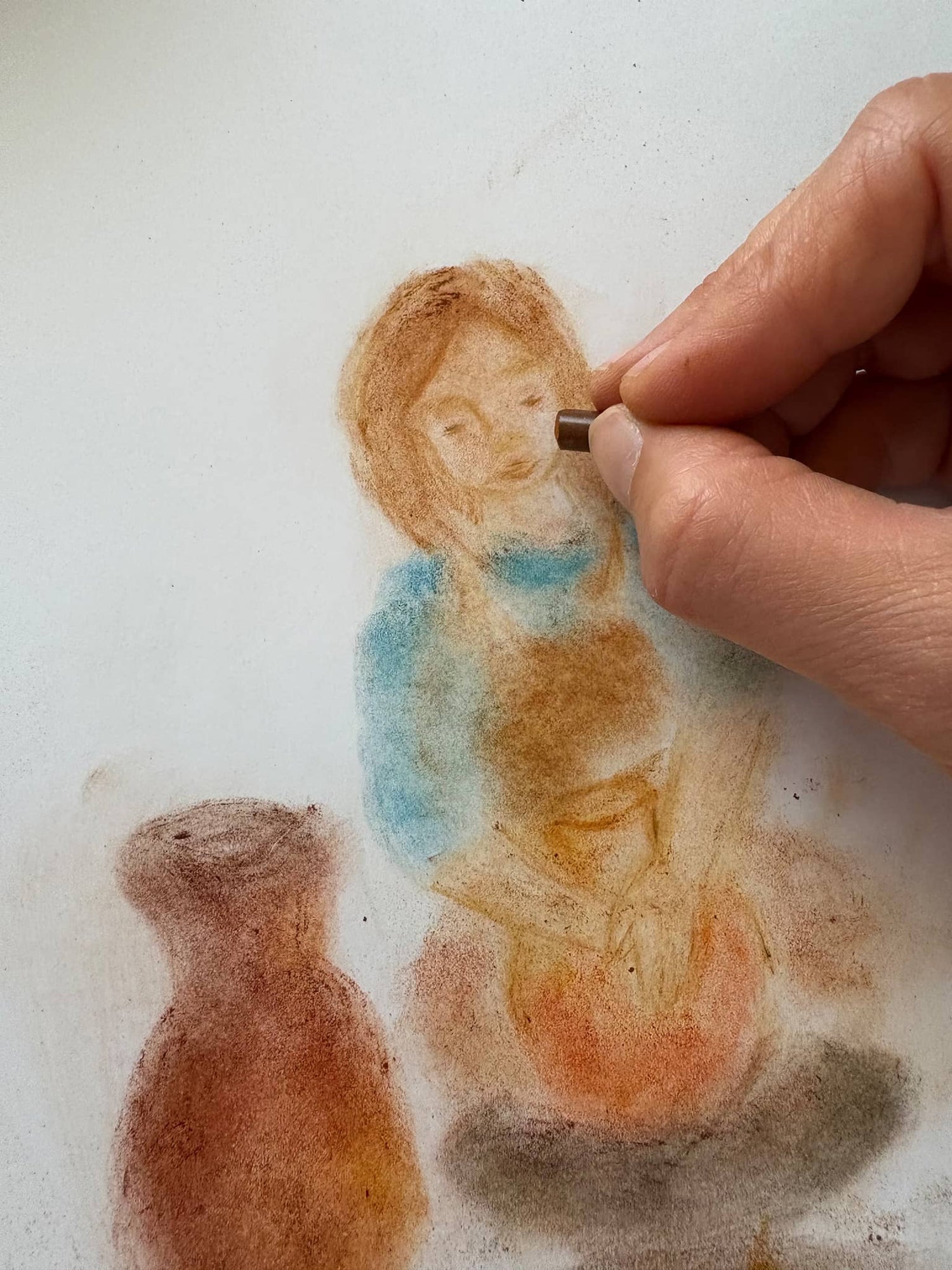
In the third grade of Waldorf schools, the focus is on exploring various crafts. Through activities like building houses, farming, baking, blacksmithing, pottery, or rope making, the children experience firsthand how meaningful things can be created from simple materials through their own actions.
The craftsmen's era offers them insights into ancient crafts and allows them to understand the world of practical things in a new way.
Experiences can also be captured creatively: Whether tools, work processes or self-made objects – with Seccorell these motifs can be easily and effectively put on paper or into the period book.
Thus, a practical experience creates a visual memory that can deepen the understanding and connection to one's own work.
Design: Andrea Reiß
Animal Studies, 4th Grade
In the fourth grade, students begin exploring the natural history of the animal kingdom – always in comparison to humans. The octopus serves as an example of the so-called "head animal": a highly sensitive creature that perceives with its entire body, reacts with lightning speed, and can envelop itself protectively in a cloud of ink.
Seccorell allows this unique quality to be impressively visualized. The painting technique makes it possible to sensitively capture the ethereal lightness of the water, the soft movements, and the mysterious nature of the octopus on paper. Color gradients and lighting effects enhance the experience – entirely without brushes or water.
This creates a lively connection to the animal world, in which sensory perception, artistic creation and content-related learning are naturally intertwined.
Design: Andrea Reiß
Botany, 5th grade
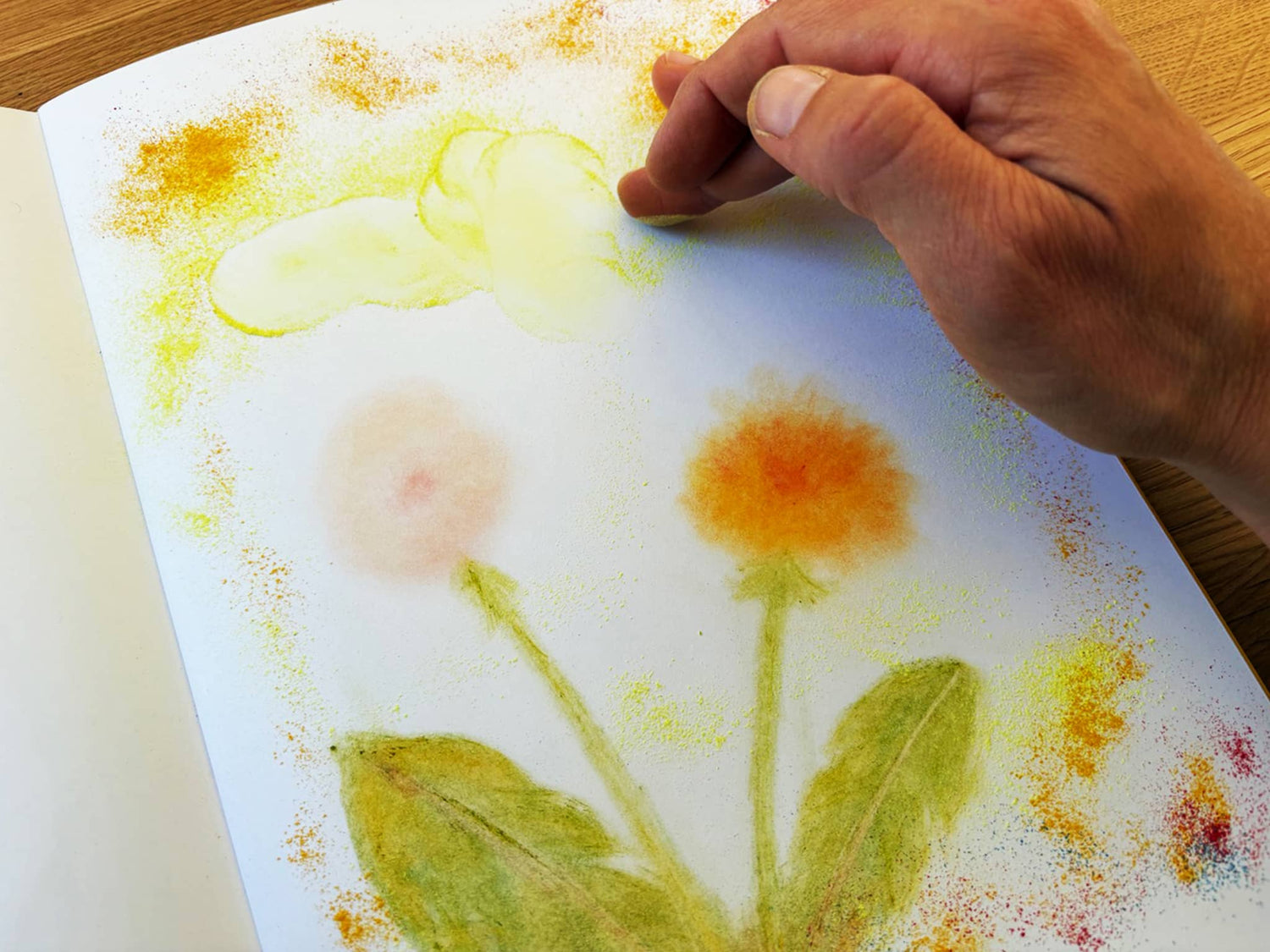
In schools and educational institutions, Seccorell has long been an integral part of creative activities. Through skin contact with their fingers, children "work" directly with the pigment, experiencing color through movement, varying pressure, and rhythm – entirely in keeping with Waldorf education, which helps to connect head, heart, and hand.
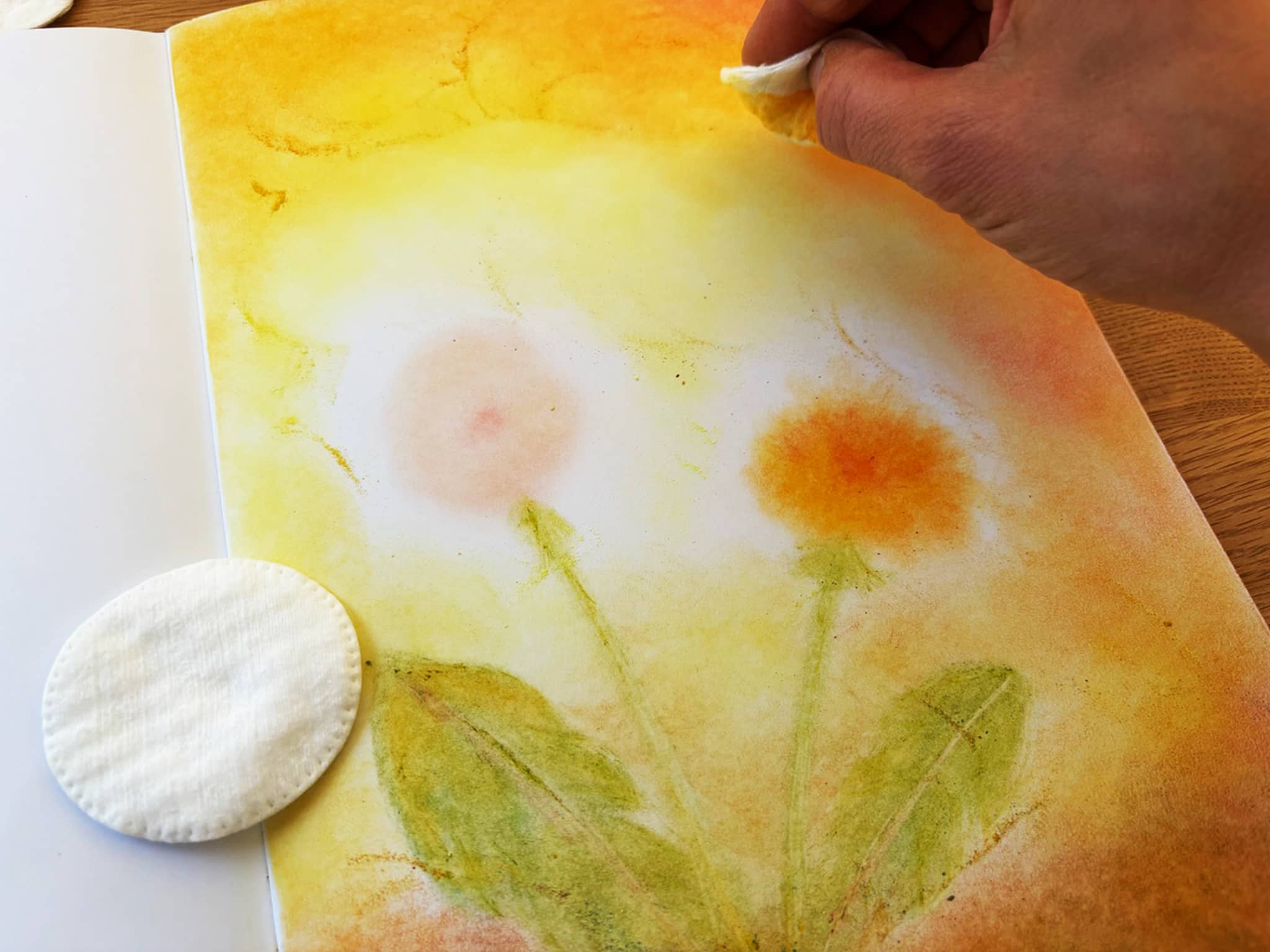
In the fifth grade of Waldorf schools, children encounter the plant kingdom in all its diversity – from simple moss to fully developed flowering plants. The dandelion is a beautiful example: radiant, luminous, and full of expressiveness.
Seccorell allows this quality to be presented with particular sensitivity: The gentle wiping technique makes light gradients, flower structure and the characteristic shape of the dandelion vividly tangible – directly in the period book, entirely without brushes, water or fixative.
Design: Andrea Reiß
Troy and Antiquity, Grade 6
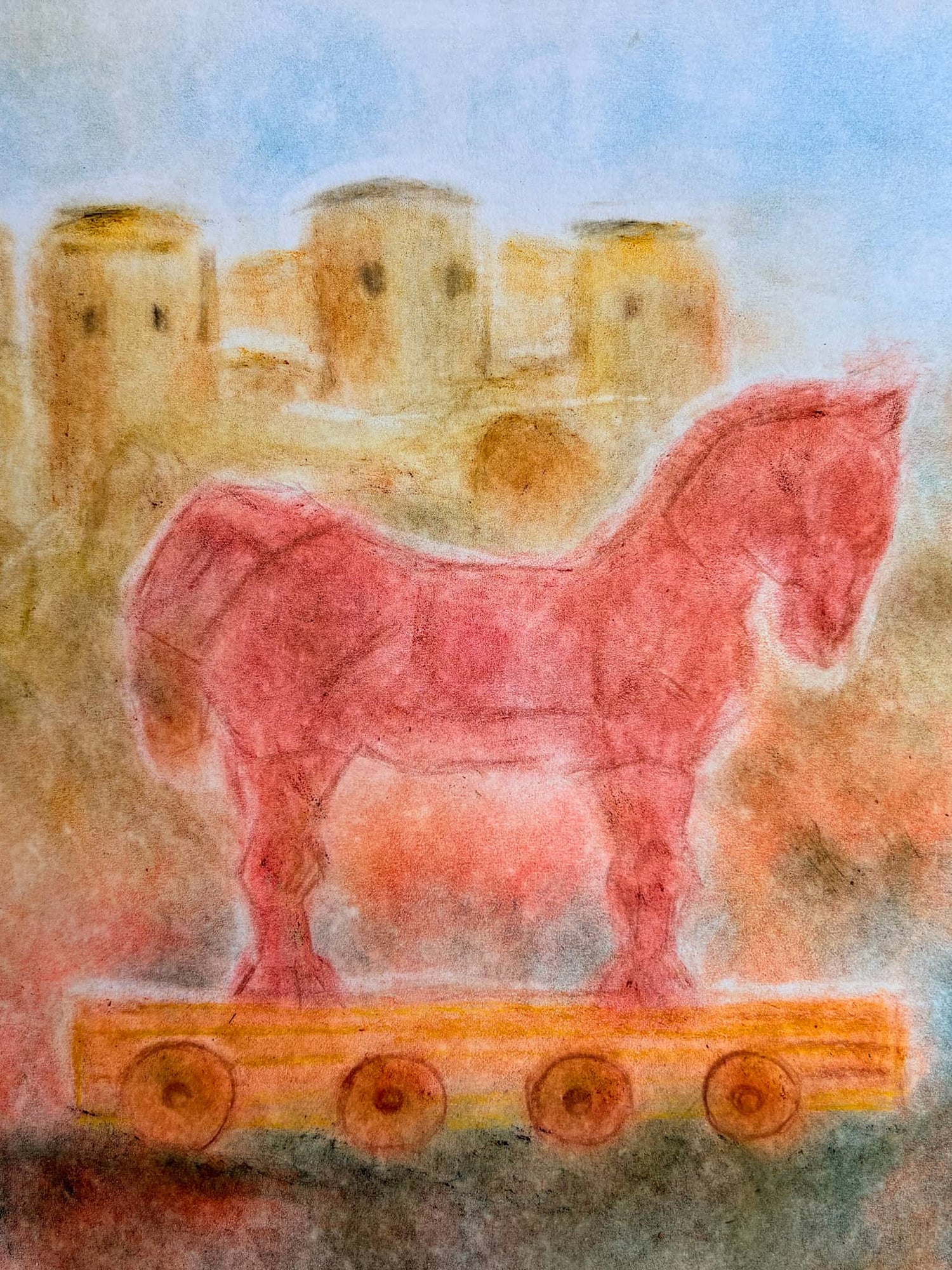
In sixth grade, students begin to explore the civilizations of antiquity. The story of the Trojan War serves as an exemplary illustration of the clash between willpower and moral conflict. During this phase of children's initial internal distancing from their surroundings, heroic sagas help them find their own identity and understand the origins of law and order in cultural history.
Andrea Reiß has used Seccorell to make the scene surrounding the Trojan Horse visible here.
The painting technique also makes it possible to sensitively capture the atmospheric light and shadow effects of the battlefields or the imposing walls of Troy in the historical period booklet. Color gradients and precise details enhance the image's message.
Applying paint directly with the fingers strengthens the students' ability to act, while they connect artistically with the major events of human history.
Design: Andrea Reiß
Field surveying, 10th grade
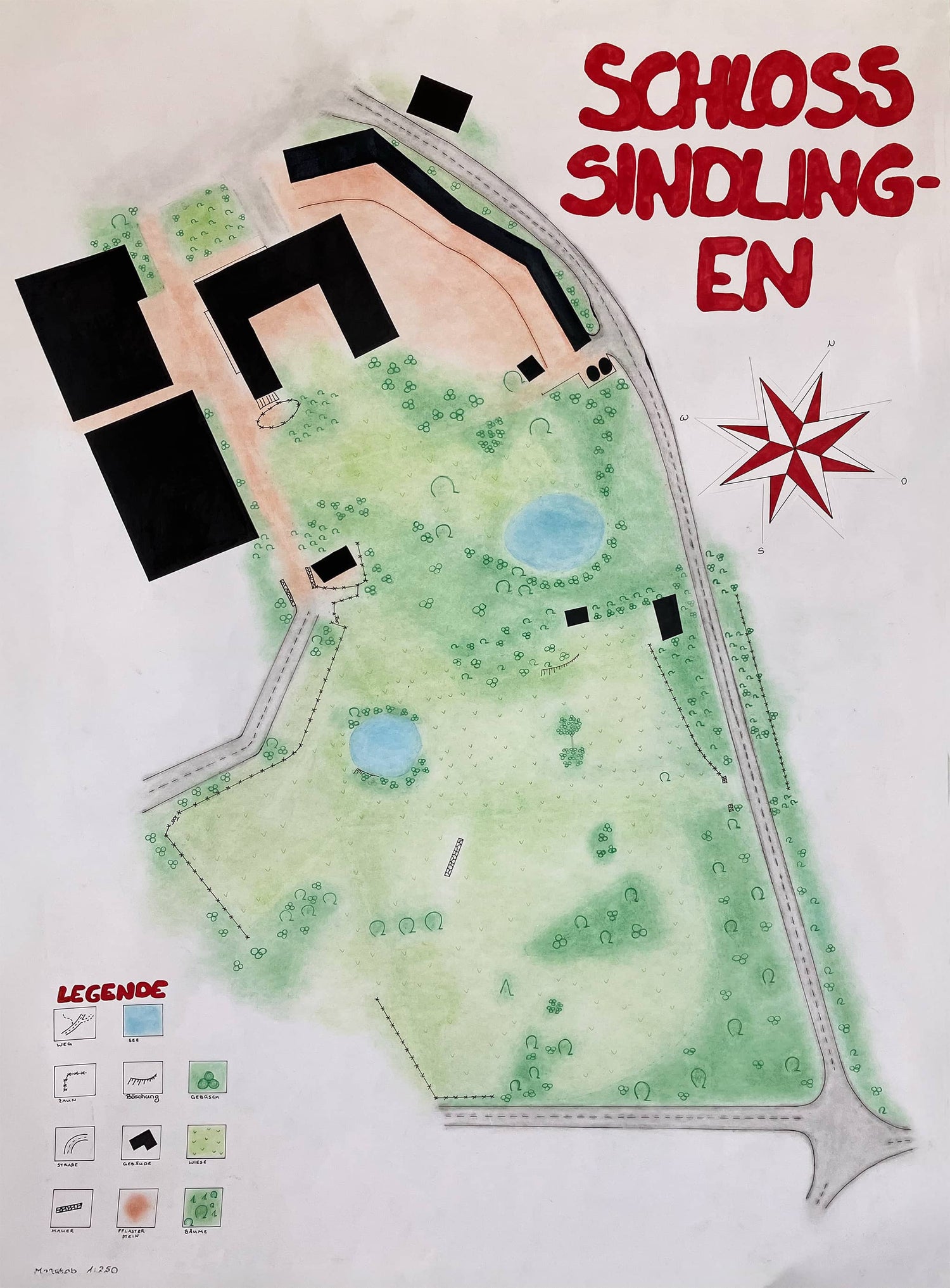
Seccorell also proves its worth in the creation of field survey plans – an integral part of Waldorf education. This painting technique allows for the easy and time-saving coloring of individual areas, thus improving the clarity and differentiation of fields, arable land, forests, and paths.
The wiping technique applies color quickly and evenly to paper – creating clean, colorfast floor plans without any water or fixative spray. Applying the paint with the fingers promotes concentration, fine motor skills, and a sensory-artistic connection to one's own work.
Practical tip: After thoroughly working the color powder in with your fingers, it is recommended to wipe the colored areas again with a cotton pad to set the colors. Any unwanted excess color can then be easily erased.
Implementation: Waldorf School Böblingen
From our daily experience with Seccorell and the positive feedback from parents, children, and educators, we suspect that this painting technique still holds many possibilities – new ideas keep emerging!
Seccorell “Field Measurement” color set
Split

15% education discount
We want to make it easier for schools, daycare centers & other social and educational institutions to access Seccorell.